
LEGAL CHECKLIST FOR WOULD-BE DEVELOPERS
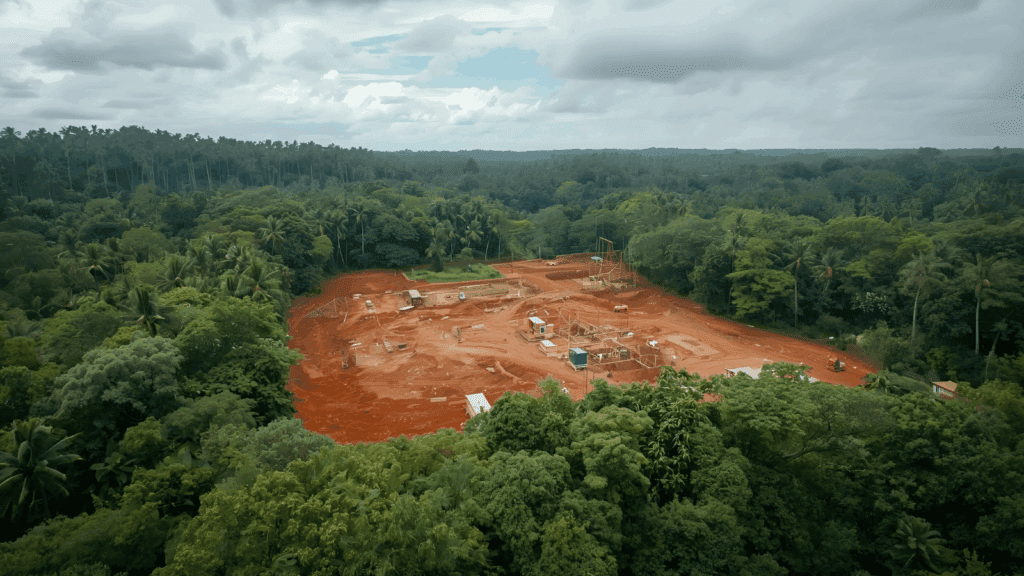
OSA VIVE’S (PARTIAL!) LEGAL CHECKLIST FOR WOULD-BE DEVELOPERS OSA VIVE’S (PARTIAL!) LEGAL CHECKLIST FOR WOULD-BE DEVELOPERS Osa Vive demands that developers respect Costa Rica’s environmental laws and we hold them legally accountable when they don’t. To help would-be developers respect the law and avoid fines, delays and jail time, we offer this partial list of questions to help developers (and investors) with their due diligence. Osa Vive’s attorneys know all the answers; attorneys working for developers should too. Costa Rica’s legal philosophy Article 50 of the Costa Rican constitution plainly states:“All persons have the right to a healthy and ecologically balanced environment.For that, they are legitimated to denounce the acts that infringe this right and to claim reparation for the damage caused. The State will guarantee, will defend and will preserve this right. The Law will determine the responsibilities and corresponding sanctions.” Do you know Article 50 has been used in environmental claims against irresponsible developments?Do you know that Costa Rican environmental law respects the “Precautionary Principle” meaning that it is the responsibility of developers to prove that their development will not harm the environment, rather than the responsibility of the government or environmental organizations to prove that the development will cause harm? Changes to forested land Forest Law 7575 contains many powerful and important provisions, including criminal penalties (jail time). The law contains a formal and technical definition of forest (it’s not just someone’s opinion) and prohibits the change of the use of land (cambio de uso del suelo) from forested to something else, like a housing development. The law provides for a small number of exceptions – for example, for an ecotourism project or for water management projects needed to maintain the integrity of the forest. Some developers believe that it is legal to change 10% of the land from forest to development; this is the so-called “10% rule.” But that is a fundamental misreading of the law. There is simply no such thing as a 10% rule that allows developers to change 10% of their forested property into a development. Osa Vive is working on such a case now. Don’t go there! Do you know that penalties for changing the use of the soil include destruction of any buildings constructed? Did you know that years of jail time are on the table for those who change the use of the soil? Consider yourself informed. Water resources Water resources (springs, wells, streams, including intermittent/temporary streams, ravines, ground water recharge areas, legal concessions) are surrounded by protected zones (zonas prohibidas) where earth cannot be moved, trees cannot be cut and development cannot occur. The extent of those protected zones around water resources ranges from 15 meters on each side up to 200 meters of radius, and varies with the steepness of the terrain, the type of resource (well vs spring vs stream), and whether the water is used by ASADA to supply a local community. Have you mapped every water resource on the property you want to develop? Have you overlaid those resources with appropriate protected zones to see how much land is actually legally available for development? Better be sure ahead of time, because the truth will come out if Osa Vive gets involved. Roads Are you planning to use an existing road, or a remnant of an old road, or build a new road? There are a lot of pitfalls regarding roads. If a road crosses property that is not yours, do you need written permission to use, modify or expand the road? Does it cross through the protected zones mentioned above associated with water resources, or forest resources? Does it cross through a wildlife corridor? If so, various government regulations may be triggered – be prepared. Do you know that if an old farm road has fulfilled its original purpose (eg, for agriculture) the road may be subject to termination? Maritime zone Do you know that within the MZ there can be no development unless the government grants concessions? Do you know that the government can revoke those concessions at their discretion? Do you know that there can also be Protected Areas within Maritime Zones where no concessions can be granted? Moving earth Do you know that a permit is needed to move earth if you are moving more than X cubic meters? Do you know what X is? Do you know the penalties for moving earth without a permit? Do you know how moved earth must be disposed of and the penalties for not disposing of it properly? Wildlife corridors and protected species Are you aware of the boundaries of the Corredor Biológico Paso de la Danta, and other wildlife reserves and corridors? Do you know the special regulations associated with that corridor? Do you know the penalties associated with violating those regulations? Permits Clearly developers need legal permits to do pretty much anything associated with developments.But take note of several important facts regarding permits: Permits granted to one applicant might not be transferable to a subsequent owner.Not all permit applications are granted.3) Permits that have been granted may be improper and can be challenged. And Osa Vive has challenged, and is challenging, the legality of many permits. We challenge improper SETENA authorizations, improper MINAE/SINAC permits, improper Muni permits. We use our legal team. We work with the Osa Fiscal. We file legal challenges with every applicable part of the Costa Rican Court system. Those legal challenges cost developers time and money. So the wisest course of action would be for developers to have their attorneys be as scrupulous as possible – as scrupulous as Osa Vive is – when applying for permits so that there is nothing left for Osa Vive to challenge. Developers will save time and money, and perhaps even sleep better at night knowing that they are respecting the laws passed by the elected representatives of the Costa Rican people. Consequences Penalties for violating the law include financial penalties (fines), restoration of destroyed habitat (time consuming and expensive) and criminal