Dominical’s Water Crisis: The Shocking Truth Behind the Illegal Development Project
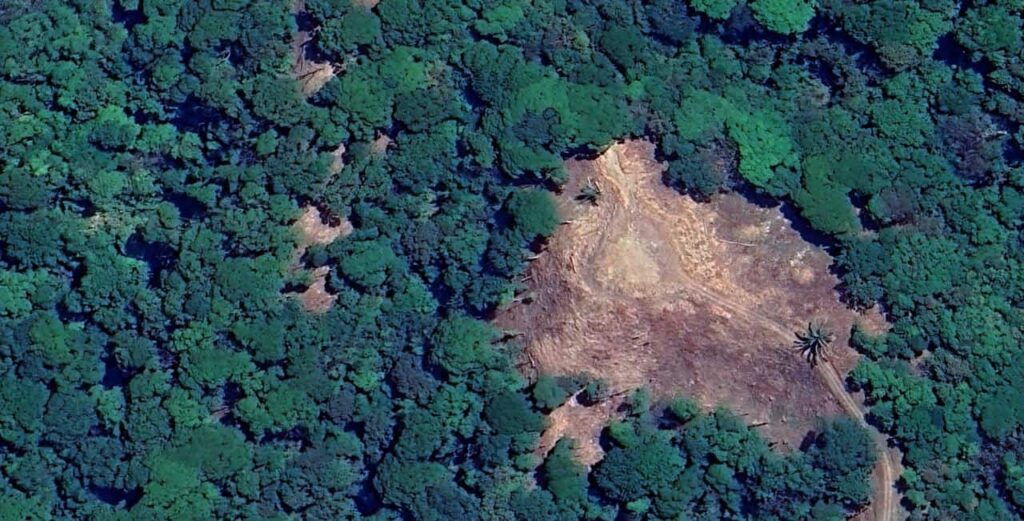
Dominical’s Water Crisis: The Shocking Truth Behind the Illegal Development Project Originally Posted on Tico Times Greed, corruption, land exploitation, and water shortages… these may sound like themes from Roman Polanski’s Chinatown, but the residents of Dominical will tell you that these issues are a reality in their own backyard. This situation is indicative of a larger trend in Costa Rica, where developers openly flaunt environmental laws with little to no consequences for their actions. While El Niño brought lower than normal rainfall to Costa Rica at the beginning of 2024, members of the community in Dominical claim that it is not the weather phenomenon, but rather a development project in the mountains that has caused a series of extended water shortages – the longest of which, on March 22, lasted over 10 hours. Even though Costa Rican law explicitly states that development projects cannot interfere with water supplies, attempts to notify the authorities of the issue in Dominical seemed to be futile. Multiple complaints or denuncias were made through the Ministry of Environment and Energy (MINAE) Integrated System for Processing and Attention to Environmental Complaints (SITADA), but there were reportedly no responses. This led residents to take matters into their own hands by creating a coalition of community members, informally called Water Issues Dominical, to raise awareness of the development project and how it was affecting their water supply. By using flyers to inform home and business owners in town of what was going on, only then were the residents able to raise concern to collectively pressure the landowners and effectively put a halt to the project. However, according to members of the committee, the community is still dealing with the aftermath of the illegal development. The water supplying Dominical originates from a series of natural springs in the mountains above town. These springs are situated on a parcel of land, about 650,000 square meters, and for 80 years this land was owned by a family who allowed the community access to the water source. The water was later “donated” in 2008 to the community and management of the water supply was effectively taken over by the Costa Rican Institute of Aqueducts and Sewers (AyA). Deforested area in mountains above Dominical – provided by Water Issues Dominical The manner in which this water becomes available for consumption in the town of Dominical is through an old-fashioned treatment system, in which the source water first flows down to a tank. It then passes through a filter where sand and other organic matter are removed before it enters a second holding tank. After that, chlorine is added to kill bacteria, but not so much to impact the taste and smell of the water itself. Many of the long-time residents of Dominical will say that this old-school system has provided them with some of the cleanest and best water in all of Costa Rica. Several years back, the owners of the parcel that contained the springs died and the land changed hands a couple of times. According to the Water Issues Dominical committee, the most recent owners used a local who hired Nicaraguan workers to carry out the work of illegally clear-cutting a swath of trees. When AyA instructed them to stop, the workers continued felling trees using axes, rather than chainsaws, presumably because they make less noise. All this was done in the area where the springs that feed Dominical’s water supply are located. Costa Rican law states that all water belongs to the government, whether it be ocean, river, estuary, lake, spring, or even groundwater and no land can be altered within 200 meters from sources of water that serve a public water system. These government-created protection zones exist because having healthy tree coverage is important to clean drinking water. Trees cut down by axes – provided by Water Issues Dominical A reduction in vegetation, due to the felling of trees, causes more erosion, leading to excess sediment entering the streams and rivers. When this water reaches the water treatment system, the increased sedimentation means the system has to be shut off in order for the particles to settle. During this time, the only source of water for consumption comes from the second holding tank, which does not provide enough water to supply the town for an extended period of time. It may take hours for the sediments to settle and for the system to start working again. This all means that in the meantime, homes and businesses are without water. According to AyA, this is exactly what has been happening to Dominical’s water supply. For restaurants in particular, there is a negative financial impact when they are unable to provide their clients with food and drink, not to mention the sanitary services necessary for a functioning establishment. Mariela Céspedes, the Assistant Manager at Mono Congo Cafe, said that during these periods in which Dominical was without water, they couldn’t serve coffee or smoothies to their customers and the only way they were able to stay open at all was because the employees, in anticipation of the shortage, collected enough water in the days prior. Other restaurants that did not collect water were forced to close their doors until the water situation improved. According to Norma Pellot, owner of Café Olas, they had to turn away customers during this time. The same was true for several hotels in town who had to cancel reservations and refund their guests. So if the impact of a single development project can have such an oversized negative impact on an entire community, why doesn’t the municipality get more involved to prevent these issues before they become a problem? Guy Phillips who lives in Escaleras, a community adjacent to Dominical, has investigated this very topic. With a resume that includes a PhD in Environmental Economics and Law from the University of Wisconsin, Professor and Chairman of the Environmental Management Department at the University of California, Riverside, and Assistant Secretary for Resources and Energy for then-Governor of California
How – and Why – to Report Environmental Damage

HOW (AND WHY) TO FILE ENVIRONMENTAL REPORTS Download PDF: English how to file environmental reports Click Here to Download Descarga PDF Aqui: Español cómo presentar informes ambientales Click Aquí Para Descargar Costa Rica has many excellent environmental laws but unfortunately it does not have the resources to effectively enforce those laws. That is where we, concerned citizens, can help. There are several ways we can report our concerns about environmental damage to the proper authorities. There are many actions that are either always illegal, or that require a permit. These include cutting trees, moving earth, setting fires, putting poison in the rivers, and more. When we see such things we have the legal right to report our concerns to the proper authorities. Before we describe how to file such a report (called a “denuncia”), it is important to note that filing a “denuncia” is not an accusation of wrong doing. It is possible that what you are seeing (for example, felled trees or earth movement) has been legally authorized and that the workers/ owners have a legal permit. However, it is also possible that the environmental damage you are seeing is illegal. And it is also possible that the workers have a permit but that it is not the correct one; at least one of our legal actions addresses this kind of situation. It is not your responsibility to determine whether the actions you see are legal or illegal. It is your right – everyone’s right in Costa Rica – to file a denuncia if you see something that concerns you. The denuncia is your way of saying: “I see something that concerns me. I don’t know if it is legal or illegal, but I am asking the proper authorities to check it out.” So, don’t be concerned that filing a denuncia is accusing anyone of anything, because it is not. The best policy is: If you see something, say something by filing a denuncia! BEST PRACTICES FOR COLLECTING EVIDENCE: Ideally you would take pictures and video to document the scene (details below). However, it is not required that you do so. If you are unable to photo document the site, or feel unsafe doing so, please be sure to file a denuncia anyway. Please note that not all methods of filing a denuncia provide a way to upload photos or video. However, your photos and videos may still be useful if there is an investigation of the incident. If you feel safe and are able to document the site, please try to follow these guidelines: Videos and pictures can be instrumental in drawing attention to violations. Often those in the community are better positioned to collect evidence of illegal actions than the professional investigators. This is because the authorities often arrive after-the-fact when the damage is already done or the evidence has been removed or is gone. Ensure your camera or cell phone is set to the correct date, time, and GPS locations so the digital metadata is recorded. Record your voice saying the date, time, and location. If you need to film anonymously, write the time, date and location on a piece of paper and hold it up in front of the camera for 10 seconds. Film strategically! Ask yourself, “If I give this footage to someone not familiar with this location, could they summarize what happened and draw an accurate map of the scene based only on the information in my video or pictures?” You want them to be able to answer, “YES!” Often the WHAT is filmed, but not the WHO and the HOW. It is best to film the entire location continuously, but if the area is too large, complex or dangerous to do so, you can start each new clip or picture by overlapping with the previous one. Drop a location pin in Google Maps so that you have accurate coordinates to share with the authorities (and with Osa Vive) for where the action is taking place. Be sure to collect the following: ✴ A very slow 360-degree pan to provide context and show what is happening behind the scene. ✴ Wide-angle shots to provide context and to identify location ✴ Medium and close-up shots to identify what is taking place ✴ If possible, film each of the shots listed above for 10 seconds or more. Move the camera slowly when you change your position or when you zoom in or out. ✴ Take pictures from different angles to make it easier for officials to identify the location. Include identifying features in the images. If trees are being cut down, it’s important to have imagery that shows a wider area so that locations can be identified later. If you were unable to add basic information to the video recording itself, then create a separate document that summarizes the key information about your visual evidence. Be sure to do this while the details are fresh in your mind. Always include: Date and time you wrote the summary Date, time and location of the filming Names and contact information for the person filming, as well as other people on scene who may have information about the events that took place. (If people wish to remain anonymous, this is okay too.) A short, factual summary of what is shown in the video. Leave out unsupported opinions, misinformation and exaggerations. Now that you have documented the scene here’s what you do with that information There are four ways to file a denuncia. Select one or more that you prefer. 1. Call 911 This can be done in English or Spanish. There is no way to upload photos or video. This may seem like a surprising option if you are from a country that uses the 911 system for emergencies. However, in Costa Rica 911 operators are trained to take environmental denuncias – it is a normal part of their job here. We recommend calling 911 for several reasons: They are on-call 24/7 There are always bilingual