The Southern Zone Is At Risk
Costa Rica’s Southern Zone is under threat from many excessive and irresponsible developments. Osa Vive wants everyone to understand the scale of development proposed and already under way in this critical part of the country. If left unchecked, these projects will transform the Southern Zone in ways that displace local people and irreparably degrade our precious environment. Most in the area do not want to see the overdevelopment, gentrification, and environmental degradation that happened in Guanacaste repeated here. Osa Vive is committed to making sure that all developments scrupulously follow Costa Rica’s excellent environmental laws that protect forests, water, land, and communities. Sadly, many projects do NOT follow the law. Osa Vive works to stop illegal destruction, keep the trees standing, and hold everyone legally accountable. We are tracking more than a dozen projects. Here are a few that concern us—and what we are doing about them. Key Risks Take-Home Message These are only some of the projects Osa Vive is working on—and we learn of more all the time. For example, at Ventanas Beach, a 465-acre property consisting mostly of forest, the owner has applied for development permits from SETENA. On Instagram, “tropicainvestments” says “The Ventanas Beach Development has unending development potential with everything you need to create a successful project, including water access and permits.” You can be sure Osa Vive is investigating this project thoroughly. If you know of another project of concern, please reach out to us so we can investigate. Osa Vive’s work is expensive, requiring lawyers and technical experts. But we know what we are doing. We are stopping illegal projects, holding violators accountable, and keeping the trees standing. If you want to help safeguard this area, if you do not want another Guanacaste in the Southern Zone, the single most effective thing you can do is to support our work. Your donation to Osa Vive directly protects this precious area from destruction. If you want advice on an environmental situation or want to let us know about a development that concerns you, Osa Vive is happy to hear from you! Public participation is absolutely key to our mission of stopping illegal development in the Southern Zone. Osa Vive cannot do it all, but we can amplify our efforts through education, hopefully inspiring the community to join our efforts.
Super-Yacht Marina, Uvita de Osa
What Is The Risk? Step 1, a marina for super-yachts, may well be followed by step 2, condos for the yacht owners in the mountains above. The proposed location of the marina is near Dominicalito Bay, at the bottom of the Cuña del Angel road (opposite the Jolly Roger road, aka Puertocito). It doesn’t take much imagination to figure out that bringing super-yachts to the area is not likely to help most locals. Instead, it is likely to be another major contributor to gentrification, further increasing prices for everyone and ramping up pressure to cut down the forest to build luxury housing. What Is Osa Vive Doing About It? Osa Vive is gathering information about what permits would be required for this project, what permits have been applied for, and which permits (if any) have been granted. Importantly, having a permit is no guarantee that a project will go forward or that it is in full compliance with the law. Osa Vive spends a lot of time and legal resources challenging permits that we think were granted improperly (for example, see The Dominical Project and The Muni and Phase 11, Ojochal). If the marina does have any permits, you can be certain that Osa Vive will make sure they are 100% legal. And if there are any improper permits, then we will nullify them.
Balcones, Las Brisas, Ojochal
What Is The Risk? This shocking $125 million development of 25 acres (10 ha) includes 11 towers and more than 500 apartment units. Can you imagine the effects of 11 buildings of this size? The blight on the landscape, impact on wildlife, infrastructure pressure, traffic, dust, increased road-repair costs, loss of tranquility? This project would also be a major contributor to the gentrification of the area—these are not affordable apartments for local ticos. We have various specific concerns about this project, including the water source, possible change in the use of the land from forest to commercial/residential (cambio del uso del suelo; see Phase 12, Ojochal), and unpermitted tree cutting. What Is Osa Vive Doing About It? The developers had a 2018 “uso del suelo” permit from the Muni that has probably expired by now. Through a forestry study, Osa Vive is investigating the basis of the SETENA permit the developers have obtained. Years ago the developers asked the Ojochal ASADA to provide water for the project, but the ASADA did not provide that water. So the developers are planning to obtain water from the Tortuga River, several kilometers away. What harms could come to the local communities from such an infrastructure project and diversion of resources? Osa Vive was not the only party paying attention to this development! Local neighbors saw and heard many trees, including big ones, being cut down on this property. These neighbors consulted with Osa Vive, and they filed environmental complaints following our advice. As a result, SINAC investigated the site, documented the environmental damage, and filed a case with the Tribunal Ambiental Administrativo. Osa Vive will be making a legal filing to attach ourselves to the case and ensure that justice is done. This is how the system should work. We are also continuing to investigate other legal aspects of this project. The Balcones project is a great example of how EVERY ONE OF US can make a difference! A big THANK YOU to those concerned neighbors! May they inspire others. Learn how to file an environmental report yourself here, and contact Osa Vive if you need advice or want to let us know about a development that concerns you. UPDATE: August 2026 Osa Vive hired a forestry engineer to study the Balcones property. Read on for what we learned! The Balcones property is forested and has been forested for years. By law, that means that the MAXIMUM area that could be used for roads and buildings is 10% of the total property, which would be 1.17 hectares. But the proposal is to develop more than 10 hectares, which is about 90% of the property! We believe that SETENA erred in granting an Environmental Viability Permit to the Balcones project. SETENA should have or could have known that the property was forested and on that basis limited the project area to 10% of the total land. It seems that the Balcones project should be reduced to 10% of what has been proposed, if not less. With our forest engineer’s report in hand, Osa Vive is working with Walter Brenes of Energy Law to officially nullify the authorization SETENA granted. The legal papers have already been filed. We are grateful to Mr. Brenes and look forward to a just resolution that respects the forest, the law, and the surrounding community.
Tierra del Ciebo, San Buenas de Osa
What Is The Risk? This development of 18 lots in San Buenas is surrounded by many trees: What Is Osa Vive Doing About It? In response to our complaint, both SINAC and Direccion de Aguas visited the site. During the site visit, inspectors identified a gravel road crossing a watercourse. Subsequently, the Dirección de Aguas determined that the watercourse qualifies as a creek. Creeks are legally protected in Costa Rica; they are not supposed to be filled with gravel and turned into roads. Abusing the creek as the developer did may constitute a violation of the Forestry Law. If so, Osa Vive will pursue that matter to its logical legal end. Inspectors also saw a road built within the protected buffer zone of the creek, a second possible violation. SINAC indicated that it is preparing a report to be submitted to the Environmental Prosecutor’s Office. In this case SINAC is doing its job, and we applaud them. (We are looking into another project by this same developer. Indeed, that particular project was stopped [“paralizado”], at least temporarily, by the municipality. In that case the developer was cited for moving 5,000 cubic meters of earth, engaging in unpermitted constructions, passing sewage through a body of water, and cutting down trees.) We hope that in the future this developer will show more respect for the environmental laws of Costa Rica. We also hope that the costly and time-consuming experience this developer is having will be a lesson to others: It is faster, cheaper, and easier to scrupulously follow the law in the first place.
The Muni and Phase 11, Ojochal
What Is The Risk? A massive amount of earth was moved to create building sites in Phase 11, a housing development of approximately 100 acres (40 ha) in Ojochal. A project of this magnitude requires layers of permits. Osa Vive believes that the first agency that should grant a permit in a development like this is SETENA. In this case, SETENA should have considered whether to grant the project an Environmental Permit to move forward. After SETENA had granted that permit, then it would be up to the Municipality of the Osa (“the Muni”) to decide which permits, if any, to grant the project (for road building, construction, etc.) What Is Osa Vive Doing About It? SETENA did not grant an Environmental Permit. Our legal team believes that in the absence of this permit, the Muni should not have granted any permits to the project. But they did—so we took the Muni to court. The court ordered the Muni to perform an investigation: English translation: “…the local government (the Muni) is ordered to initiate an internal investigation to assess whether the environmental impact requirements of the original subdivision project were omitted, determine accordingly the responsible officials; determine the possible damages to the environment, collect through administrative channels any damage resulting from the possible omissions of environmental permits; and communicate, if necessary, the result of the investigation to the Public Ministry, so that it may investigate whether there are criminal offenses…” Osa Vive’s legal team believes that the Muni has not fully complied with the court order. We therefore feel compelled to push this case upward through the court system until the Muni has fully complied with the original order. This critically important case has wide-ranging implications. If the Muni granted permits when it should not have (without a required SETENA permit), one might wonder whether the Muni has done so in previous cases—or might do so in the future. This case does something unusual and important: It holds the Muni legally accountable. We hope that it will encourage the Muni to grant permits with great care in the future, even as our case works its way through the court system.
Phase 12, Ojochal
What Is The Risk? The 200-acre (81-ha) Phase 12 parcel in Ojochal is large enough for hundreds of lots and homes. This land is locally famous because in 2019 it was set on fire (intentionally, based on the opinion of the fire crew). Many residents of Ojochal saw—and inhaled—the smoke, and at least one person had to be evacuated. We can never know for sure all of the devastating effects on wildlife in the area. The developer began the legal paperwork to create lots for sale, but one detail matters: The land is forested. In Costa Rica you cannot “change the use of the soil” (cambio el uso del suelo) without strict permission. Doing so is a criminal—not civil—offense. This law is one of the reasons Costa Rica has been able to successfully reforest land since the late 1980s, when up to half of the original rainforests had been cleared for logging, cattle ranching, and large-scale agriculture. Today, once trees reach a certain size and the canopy closure reaches a certain threshold, the land is legally considered to be forested. Both primary and secondary forests are legally protected. What Is Osa Vive Doing About It? This case brought us together to found Osa Vive! Based on a report from the technical experts of OIJ and other professionals, much of Phase 12 is forested. Our legal team believes that the fire did not change this fact: If the land was forested before the fire, that is all that matters. Osa Vive’s legal team promptly filed paperwork to stop the development of Phase 12—and it worked. The land has been undisturbed, with the trees quietly growing and the wildlife returning. The intended development has not happened. The case is still working its way through the legal system. We have filed a criminal complaint against the developer. For now, we are thrilled to have protected such a large piece of forest. This outcome is a major victory for Osa Vive—and for everyone who cares about the Southern Zone. It is also a major statement to developers: Follow the law or face the consequences.
The Dominical Project
What Is The Risk? This $700 million(!!) project covers 65 acres (26 ha) for luxury hotels, condos, villas, and townhouses. This would be enough housing for hundreds of people, but how much would the local community benefit? And we are concerned that a project of this size could cause irreparable harm to the ecosystem. Learn about the project at thedominicalproject.com. We believe there could be serious problems with water availability (the developers even proposed a desalination plant!), and that the project could create additional stress on an already-problematic and fragile electrical grid. We are also concerned about proper disposal of the massive amounts of wastewater such a project would produce. Local businesses would suffer in competition with the proposed luxury hotels and residences. The amount of public input the developers solicited for such a massive project strikes us as insufficient for an undertaking of this size. What Is Osa Vive Doing About It? We have studied the proposed Dominical development extensively, and our legal team has taken action. We want to ensure that the project does not run afoul of laws that protect forests and water resources. Osa Vive hired a forest engineer to study the mountainous part of the project, inland from the highway (the developers call this Dominical Ridge). The engineer concluded that the land is largely forested and steep. Those two factors mean that the amount of building possible is significantly less than what the developers propose. The part of the project on flat land, on the ocean side of the highway (the developers call this Playa Dominical), contains a flood zone and three springs. The legally required setbacks around these areas would further significantly reduce the amount of possible development. In summary, Osa Vive is concerned that the project may not follow several important articles of Costa Rican law. Our attorneys are therefore working to nullify the permits granted to this project. We are confident that the work we have done will prevent the proposed project from happening, and we will not rest until all permits for this project have expired or been revoked or until we are certain that it fully complies with Costa Rican law.
LEGAL CHECKLIST FOR WOULD-BE DEVELOPERS
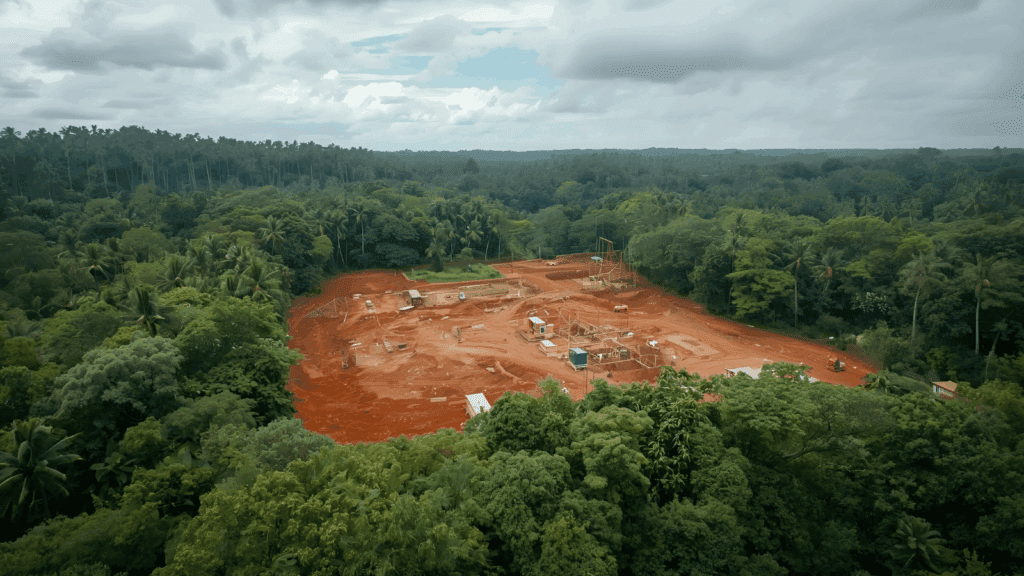
OSA VIVE’S (PARTIAL!) LEGAL CHECKLIST FOR WOULD-BE DEVELOPERS OSA VIVE’S (PARTIAL!) LEGAL CHECKLIST FOR WOULD-BE DEVELOPERS Osa Vive demands that developers respect Costa Rica’s environmental laws and we hold them legally accountable when they don’t. To help would-be developers respect the law and avoid fines, delays and jail time, we offer this partial list of questions to help developers (and investors) with their due diligence. Osa Vive’s attorneys know all the answers; attorneys working for developers should too. Costa Rica’s legal philosophy Article 50 of the Costa Rican constitution plainly states:“All persons have the right to a healthy and ecologically balanced environment.For that, they are legitimated to denounce the acts that infringe this right and to claim reparation for the damage caused. The State will guarantee, will defend and will preserve this right. The Law will determine the responsibilities and corresponding sanctions.” Do you know Article 50 has been used in environmental claims against irresponsible developments?Do you know that Costa Rican environmental law respects the “Precautionary Principle” meaning that it is the responsibility of developers to prove that their development will not harm the environment, rather than the responsibility of the government or environmental organizations to prove that the development will cause harm? Changes to forested land Forest Law 7575 contains many powerful and important provisions, including criminal penalties (jail time). The law contains a formal and technical definition of forest (it’s not just someone’s opinion) and prohibits the change of the use of land (cambio de uso del suelo) from forested to something else, like a housing development. The law provides for a small number of exceptions – for example, for an ecotourism project or for water management projects needed to maintain the integrity of the forest. Some developers believe that it is legal to change 10% of the land from forest to development; this is the so-called “10% rule.” But that is a fundamental misreading of the law. There is simply no such thing as a 10% rule that allows developers to change 10% of their forested property into a development. Osa Vive is working on such a case now. Don’t go there! Do you know that penalties for changing the use of the soil include destruction of any buildings constructed? Did you know that years of jail time are on the table for those who change the use of the soil? Consider yourself informed. Water resources Water resources (springs, wells, streams, including intermittent/temporary streams, ravines, ground water recharge areas, legal concessions) are surrounded by protected zones (zonas prohibidas) where earth cannot be moved, trees cannot be cut and development cannot occur. The extent of those protected zones around water resources ranges from 15 meters on each side up to 200 meters of radius, and varies with the steepness of the terrain, the type of resource (well vs spring vs stream), and whether the water is used by ASADA to supply a local community. Have you mapped every water resource on the property you want to develop? Have you overlaid those resources with appropriate protected zones to see how much land is actually legally available for development? Better be sure ahead of time, because the truth will come out if Osa Vive gets involved. Roads Are you planning to use an existing road, or a remnant of an old road, or build a new road? There are a lot of pitfalls regarding roads. If a road crosses property that is not yours, do you need written permission to use, modify or expand the road? Does it cross through the protected zones mentioned above associated with water resources, or forest resources? Does it cross through a wildlife corridor? If so, various government regulations may be triggered – be prepared. Do you know that if an old farm road has fulfilled its original purpose (eg, for agriculture) the road may be subject to termination? Maritime zone Do you know that within the MZ there can be no development unless the government grants concessions? Do you know that the government can revoke those concessions at their discretion? Do you know that there can also be Protected Areas within Maritime Zones where no concessions can be granted? Moving earth Do you know that a permit is needed to move earth if you are moving more than X cubic meters? Do you know what X is? Do you know the penalties for moving earth without a permit? Do you know how moved earth must be disposed of and the penalties for not disposing of it properly? Wildlife corridors and protected species Are you aware of the boundaries of the Corredor Biológico Paso de la Danta, and other wildlife reserves and corridors? Do you know the special regulations associated with that corridor? Do you know the penalties associated with violating those regulations? Permits Clearly developers need legal permits to do pretty much anything associated with developments.But take note of several important facts regarding permits: Permits granted to one applicant might not be transferable to a subsequent owner.Not all permit applications are granted.3) Permits that have been granted may be improper and can be challenged. And Osa Vive has challenged, and is challenging, the legality of many permits. We challenge improper SETENA authorizations, improper MINAE/SINAC permits, improper Muni permits. We use our legal team. We work with the Osa Fiscal. We file legal challenges with every applicable part of the Costa Rican Court system. Those legal challenges cost developers time and money. So the wisest course of action would be for developers to have their attorneys be as scrupulous as possible – as scrupulous as Osa Vive is – when applying for permits so that there is nothing left for Osa Vive to challenge. Developers will save time and money, and perhaps even sleep better at night knowing that they are respecting the laws passed by the elected representatives of the Costa Rican people. Consequences Penalties for violating the law include financial penalties (fines), restoration of destroyed habitat (time consuming and expensive) and criminal
The Costanera Billboard Project: A Message in Three Parts

The Costanera Billboard Project: A Message in Three Parts Osa Vive recently installed a series of three bilingual educational billboards along the Costanera highway between Ojochal and Uvita. Why? Because sometimes, you have to fight bulldozers with big signs. Why This Matters Costa Rica is a global gem: breathtakingly beautiful, fiercely peaceful, wildly biodiverse, and full of kind, proud people. The Southern Zone in particular is like nature’s VIP lounge—monkeys swinging overhead, toucans arguing in the trees, coral reefs shimmering offshore, and culture that pulses with life. It’s no wonder people from around the world come here seeking the magic. And when tourism is rooted in sustainability—eco-lodges, cultural immersion, forest hikes, reef snorkeling—it supports the local economy and protects the very things people come to experience. But not everyone comes here for sloths and sunsets. Some come chasing one thing: MONEY. Where you might see a pristine forest full of life, these folks see “undeveloped land with ocean views.” To them, it’s all potential profit—trees, animals, communities be damned. Billboard #1: PURA VIDA? We all know the phrase. Pura vida means “pure life”—a celebration of Costa Rican culture, joy, nature, and community. But lately, it’s starting to feel like “loving something to death.” In the name of “development,” forests are being clear-cut. Wildlife is losing its home. Hillsides are scraped down to clay, causing erosion that clogs rivers and suffocates coral reefs. It’s not development—it’s destruction dressed up in tropical real estate brochures. Developers are selling a dream. But if you look closer, it’s more like a scam. Billboard #2: OVERDEVELOPMENT DESTROYS NATURE… AND RAISES COSTS FOR LOCALS Yes, cutting down forests harms the environment. That much is obvious. What’s less obvious is how overdevelopment dries up more than just creeks—it dries up opportunities for locals. Fewer trees mean less rain. More visitors mean more water use. Suddenly, the once-abundant Southern Zone is facing shortages. (Locals collecting water in Guanacaste. Credit: Tico Times) And while large-scale projects might create a few temporary construction jobs, many of those go to people who are not local or are even from other countries like Nicaragua. The long-term jobs left for locals? Often low-paying roles in gardening or cleaning, with little upward mobility. Meanwhile, who benefits? Investors. Wealthy developers. People rich enough to build luxury homes in someone else’s paradise. These folks aren’t hurting—but their projects hurt everyone else. Need proof? Look at Guanacaste. It’s filled with resorts, and also one of the poorest regions in the country. Locals there are being priced out of their own towns. The same is already starting to happen here in the Southern Zone. High-end developments don’t lift up communities—they push them out. Billboard #3: LET’S PROTECT FORESTS, COMMUNITIES, AND WATER Here’s the deal: once these habitats are gone, they’re gone. Once living costs skyrocket, people can’t afford to come back. There’s no “undo” button. Tourists don’t fly here to see condos. They come for waterfalls, howler monkeys, and jungle trails. They want the real Costa Rica, not a gated community with imported palm trees. And Ticos are pushing back. In Samara, a community just blocked a massive development project. Nationwide, citizens are standing up to gentrification and fighting to keep their land, culture, and environment intact. But this fight isn’t over—it’s just beginning. Guanacaste is already overbuilt. Let’s not let the same thing happen here. What Can We Do? We need to rethink what “luxury” really means. Is it a marble countertop with a view, or waking up to toucans and the smell of rainforest? Is it exclusivity—or authenticity? Even global artists like Bad Bunny are calling out the dangers of this trend. His song “El Apagón” talks about how irresponsible development has devastated Puerto Rico and Hawaii. Sound familiar? It’s happening here, too. We believe that development should benefit locals—not displace them. It should create opportunities and protect the environment, not exploit both. That’s why we support Tico-owned businesses that preserve the land and promote eco-tourism. That’s the path forward. How You Can Help We say NO to irresponsible development.We say YES to sustainable tourism.And we ask visitors: Protect the communities and ecosystems you came to see. Osa Vive works hard to fight back—legally. We research, file claims, review permits, and do environmental impact assessments. But all of that takes money. The number of projects we can take on depends directly on the resources we have. So if you love this region—and want to see it stay wild, vibrant, and affordable for the people who call it home—please help: 👉 Become a member👉 Donate if you can: osavive.org/donate👉 Follow us and share the word Together, we can make sure Pura Vida stays pure. Are you looking to get involved? Below are ways you can help! Donate Volunteer
OSA VIVE JOINS 1% FOR THE PLANET

OSA VIVE JOINS 1% FOR THE PLANET —ENGLISH VERSION BELOW— Osa Vive se complace en anunciar que nos hemos unido a 1% for the Planet como Socio Ambiental Verificado. Las donaciones que recibamos a través de esta colaboración aumentarán nuestro impacto e involucrarán a más empresas en el movimiento ambiental. 1% for the Planet es un socio responsable para las empresas que rechazan la rutina y se comprometen a apoyar a Socios Ambientales Verificados que marcan la diferencia en todo el mundo. Fundada en 2002 por Yvon Chouinard, fundador de Patagonia, y Craig Mathews, fundador de Blue Ribbon Flies, sus miembros han donado cientos de millones de dólares a Socios Ambientales hasta la fecha. Las empresas miembro donan el 1% de sus ganancias cada año a Socios Ambientales Verificados, como Osa Vive. “El objetivo de 1% for the Planet es ayudar a financiar estas diversas organizaciones ambientales para que, colectivamente, puedan ser una fuente más poderosa para resolver los problemas del mundo”, escribe Yvon Chouinard, cofundador de 1% for the Planet. Queremos agradecer a Liquid Blue, la primera empresa miembro del 1% en realizar una generosa donación a Osa Vive a través del programa 1%. Nos honra contar con su apoyo. Si forma parte de una empresa miembro del 1%, conoce a alguien que lo sea o desea animar a alguien a unirse al programa, asegúrese de informarle que Osa Vive ahora es un Socio Ambiental aprobado al que puede donar. Gracias por su compromiso y apoyo. Osa Vive is pleased to announce that we have joined 1% for the Planet as a vetted Environmental Partner! The donations we receive through this partnership will increase our impact and involve more businesses in the environmental movement. 1% for the Planet is an accountability partner for businesses that reject business as usual and commit to supporting vetted Environmental Partners that are making a difference around the globe. Started in 2002 by Yvon Chouinard, founder of Patagonia, and Craig Mathews, founder of Blue Ribbon Flies, their members have given hundreds of millions of dollars to Environmental Partners to date. Member businesses donate 1% of their profits every year to vetted Environmental Partners, like Osa Vive. “The intent of 1% for the Planet is to help fund these diverse environmental organizations so that collectively they can be a more powerful source in solving the world’s problems,” writes Yvon Chouinard, co-founder of 1% for the Planet.” We would like to give a shout out to Liquid Blue, the first 1% Member business to make a generous donation to Osa Vive through the 1% program. We are honored to have earned their support. If you are a part of a 1% Member business, know someone who is, or want to encourage someone to join the program, please be sure to let them know that Osa Vive is now a vetted Environmental Partner to which they can donate. Thank you for your commitment and your support.”